Homeowners Insurance
10/25/2025Blog Categories
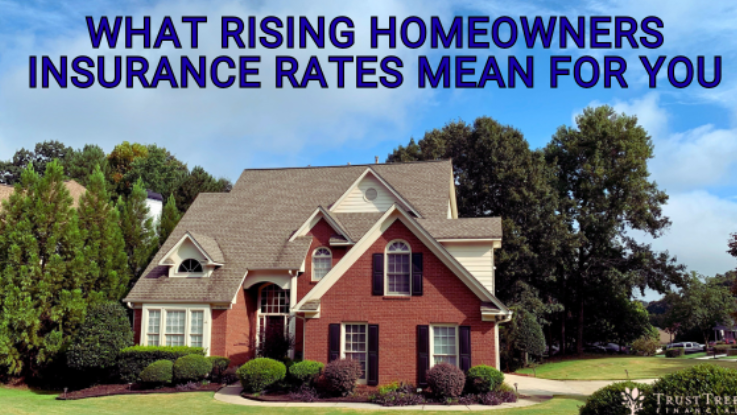
You’ve probably noticed that insurance premiums are on the rise. And fast!
It could be auto insurance. It could be health insurance. They both have seen upticks in cost.
But I just went through the fun (HA!) process of evaluating and renewing my annual homeowners policy. I find it hard to believe that these things can keep going up every year, for a variety of reasons. I was told mine went up due to the higher costs of rebuilding a house —materials, labor, blah blah blah.
Undoubtedly, one of the most dramatic spikes has been in homeowners’ premiums, especially in areas vulnerable to natural disasters. Wildfires, hurricanes, and other major weather events are driving rates higher from Florida to California. Across the country, homeowners have experienced 24% average increases over the past three years, with some states seeing increases of more than 50%.
Those higher insurance bills are having a meaningful impact on household budgets. As of last July, insurance premiums accounted for more than 9% of the average monthly mortgage payment for a single family residence—the highest figure on record. Much of this is tied to natural disasters, which have not only increased insurer payouts but have also driven up the cost of reinsurance (insurance for insurance companies).
Unfortunately, this trend shows no signs of reversing. And if the damage in eastern Tennessee and western North Carolina from 2024’s Hurricane Helene taught us anything, it’s that extreme weather can hit in unexpected places. No matter where you live, it’s worth considering how rising insurance costs could impact your financial picture.
For many, the most immediate effects of rising homeowners rates will be on their primary residence. If you’re facing rising rates—or your location suggests you might in the future—several strategies can help manage costs while keeping you well protected.
Start by taking a fresh look at your current insurance policy. Review your coverage to make sure it aligns with your actual needs. Remember that being under-insured can also expose you to risk. If standard policies no longer cover certain events, consider whether umbrella policies or supplemental coverage can fill the gaps. Homeowners policies often don’t cover flooding or earthquakes, for example. If you live in an area prone to these events, you may need separate policies for adequate insurance.
Once you’re sure you’re not over- or under-insured, you can do some comparison shopping to see whether other providers offer better rates for equivalent protection. An insurance agent can be a big help in this area, pointing you toward policies with coverage you need at competitive rates. In my case, I shopped around only to find my current carrier provided the best rate, even with the 8% increase.
Aside from shopping for cheaper coverage, another way to lower premiums is to increase your deductible. Doing so means you’re taking on more of the risk of loss yourself. But pairing a higher deductible with a dedicated savings plan for insurance-related expenses may help you manage increased costs.
One last idea is to get a bundled quote – see if the insurance company will give you a better deal for combining your house coverage with your auto coverage. In the past, a bundled quote has saved me money (unfortunately, not this year!).
If you have plans to relocate in retirement, you may also want to factor insurance costs into that decision. For instance, Florida has long attracted retirees with its favorable taxes and relatively low cost of living. Nowadays, those same homeowners are facing more challenges finding—and affording—insurance.
Real estate may also be part of your investment portfolio. Here, rising insurance rates can also pose challenges: Bigger insurance bills can directly eat into cash flow from rental properties. If you’re a landlord, you may be able to offset this cost by raising rents or, for commercial properties, adjusting lease agreements to shift insurance obligations to tenants.
What’s more, as insurance becomes expensive or even inaccessible in certain areas, property valuations may suffer, potentially impacting real estate’s effectiveness as a long-term investment.
To combat these issues, consider geographic diversification in your portfolio as different regions face varying risks. A note of caution: As you research locations, bear in mind that lists of average insurance premiums can be misleading due to varying coverage requirements from state to state. Hawaii, for instance, technically offers the lowest average rates nationally. But Hawaii’s basic plans don’t cover wind risk, which is a major concern there. Again, an insurance agent can help draw your attention to coverage gaps like these.
Adapting your financial plan to today’s evolving insurance landscape starts with understanding how these rising costs affect you. The right strategy depends on your goals, location, and broader financial picture. If you’d like help evaluating your options, we’d love to help save money where possible.
And if you need an introduction to a property and casualty agent, we can provide that as well.
Brandon
It could be auto insurance. It could be health insurance. They both have seen upticks in cost.
But I just went through the fun (HA!) process of evaluating and renewing my annual homeowners policy. I find it hard to believe that these things can keep going up every year, for a variety of reasons. I was told mine went up due to the higher costs of rebuilding a house —materials, labor, blah blah blah.
Undoubtedly, one of the most dramatic spikes has been in homeowners’ premiums, especially in areas vulnerable to natural disasters. Wildfires, hurricanes, and other major weather events are driving rates higher from Florida to California. Across the country, homeowners have experienced 24% average increases over the past three years, with some states seeing increases of more than 50%.
Those higher insurance bills are having a meaningful impact on household budgets. As of last July, insurance premiums accounted for more than 9% of the average monthly mortgage payment for a single family residence—the highest figure on record. Much of this is tied to natural disasters, which have not only increased insurer payouts but have also driven up the cost of reinsurance (insurance for insurance companies).
Unfortunately, this trend shows no signs of reversing. And if the damage in eastern Tennessee and western North Carolina from 2024’s Hurricane Helene taught us anything, it’s that extreme weather can hit in unexpected places. No matter where you live, it’s worth considering how rising insurance costs could impact your financial picture.
Check Your Policy
For many, the most immediate effects of rising homeowners rates will be on their primary residence. If you’re facing rising rates—or your location suggests you might in the future—several strategies can help manage costs while keeping you well protected.
Start by taking a fresh look at your current insurance policy. Review your coverage to make sure it aligns with your actual needs. Remember that being under-insured can also expose you to risk. If standard policies no longer cover certain events, consider whether umbrella policies or supplemental coverage can fill the gaps. Homeowners policies often don’t cover flooding or earthquakes, for example. If you live in an area prone to these events, you may need separate policies for adequate insurance.
Once you’re sure you’re not over- or under-insured, you can do some comparison shopping to see whether other providers offer better rates for equivalent protection. An insurance agent can be a big help in this area, pointing you toward policies with coverage you need at competitive rates. In my case, I shopped around only to find my current carrier provided the best rate, even with the 8% increase.
Aside from shopping for cheaper coverage, another way to lower premiums is to increase your deductible. Doing so means you’re taking on more of the risk of loss yourself. But pairing a higher deductible with a dedicated savings plan for insurance-related expenses may help you manage increased costs.
One last idea is to get a bundled quote – see if the insurance company will give you a better deal for combining your house coverage with your auto coverage. In the past, a bundled quote has saved me money (unfortunately, not this year!).
If you have plans to relocate in retirement, you may also want to factor insurance costs into that decision. For instance, Florida has long attracted retirees with its favorable taxes and relatively low cost of living. Nowadays, those same homeowners are facing more challenges finding—and affording—insurance.
Check Your Real Estate Investments
Real estate may also be part of your investment portfolio. Here, rising insurance rates can also pose challenges: Bigger insurance bills can directly eat into cash flow from rental properties. If you’re a landlord, you may be able to offset this cost by raising rents or, for commercial properties, adjusting lease agreements to shift insurance obligations to tenants.
What’s more, as insurance becomes expensive or even inaccessible in certain areas, property valuations may suffer, potentially impacting real estate’s effectiveness as a long-term investment.
To combat these issues, consider geographic diversification in your portfolio as different regions face varying risks. A note of caution: As you research locations, bear in mind that lists of average insurance premiums can be misleading due to varying coverage requirements from state to state. Hawaii, for instance, technically offers the lowest average rates nationally. But Hawaii’s basic plans don’t cover wind risk, which is a major concern there. Again, an insurance agent can help draw your attention to coverage gaps like these.
Adapting your financial plan to today’s evolving insurance landscape starts with understanding how these rising costs affect you. The right strategy depends on your goals, location, and broader financial picture. If you’d like help evaluating your options, we’d love to help save money where possible.
And if you need an introduction to a property and casualty agent, we can provide that as well.
Brandon