How often should I check my portfolio?
05/16/2024Blog Categories
Today’s topic is more of a ‘question from the mailbox’ type of topic.
I get this question often, more than you might think:
How often should I be checking on my portfolio?
This is basically a client asking me how frequently they should log in and view their account balances.
Sometimes they start by telling me how often they do it, then ask if I think that is too much or not enough.
It’s easily one of my top three most-asked questions.
While I think the answer is pretty short and sweet (quarterly at minimum), I understand the desire to check more frequently. Admittedly it’s hard for me to advise otherwise, as I am one checking portfolios daily. But that’s my JOB! I am paid to do just that.
I understand that many people love to watch the day-to-day movements of their investments. People can pull up their portfolios on their phones as quickly as they can on their Facebook feed. A certain adrenaline rush can come with that, like a dopamine hit. After all, trading stocks is akin to legalized gambling…some get addicted to it!
Studies have shown inverse correlations between portfolio viewing frequency and performance. That’s right, people (much smarter than I) have concluded that those who look at their accounts more frequently tend to have lower returns over time. If you were more likely to experience lower returns every time you pulled up your account values, would you want to look more…or less?
Now if you are the type of person who can maintain an emotional distance from your portfolio fluctuations, fine. Check as often as you want.
But from my experience, most people are not that disciplined. They might see a news headline and wonder how that (typically negative news) is impacting their portfolio. I often see people get stressed over it.
After all, where do you want to focus your valuable time? Monitoring your portfolio or doing things you love (or have) to do?
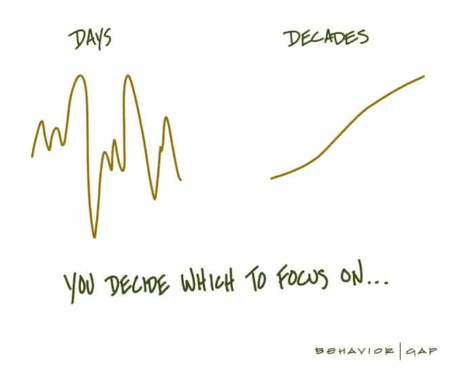
Stress over the short-term volatility tends to cloud judgement. Watching things like a hawk encourages panic transactions – not to mention potentially hefty capital gains! Having a more hands-off approach is generally a better idea.
We’ve also long known how susceptible investors are to FOMO (fear of missing out), loss aversion, recency, and a bevy of other behavioral biases. These biases trick us into chasing breaking news, rather than maintaining a more sustainable long-term perspective.
Reactionary trading can cost you. For example, an article in Canada’s The Globe and Mail, “Check in, freak out,” reported:
“A study conducted by U.S. robo-adviser SigFig found that its investors who checked in on their portfolios every day earned 0.2 percent less each year in return than the average. Twice-a-day logins doubled the performance gap.”
Watching the market’s bouncing ball can also leave you more unhappy than if you only check in periodically. As Nobel Laureate Daniel Kahneman observed:
“If owning stocks is a long-term project for you, following their changes constantly is a very, very bad idea. It’s the worst possible thing you can do, because people are so sensitive to short-term losses. If you count your money every day, you’ll be miserable.”
So, my advice is simple: don’t do that. Don’t let yourself look at the market’s daily news. Instead, nudge yourself into staying focused on what really matters.
If you are not using an advisor to help with your finances, here are a couple of tips. First, set a timeframe on your calendar (say every 6-12 months) to review and rebalance. Alternatively, you can set up alerts to have your accounts tell you when something gets out of line and needs to be adjusted.
The caveat is – if you want to own individual stocks, you might want to check it sooner. I typically do not advise people to venture into the stock-picking world, but if so, that may warrant more frequent checking since individual stocks are sometimes volatile.
If you have properly set up your investment mix from the start, it should not require day-to-day viewing. From investing onset, you should have gone through a thorough exercise to predetermine the overall level of risk you should be taking. If that is in place, all the daily “noise” in the media should not prompt any impromptu changes in your investment mix.
Over time, things will change. You might come into some money. You will get older (and want to take less risk). You may become disabled, or ill. All of these life events may indicate it’s time to review the portfolio and possibly shift things around. If not, no urgent need to review frequently.
Most DIY’ers do it on their own because of the perceived cost of hiring an advisor. I’d encourage those people to consider the cost versus benefit. Like most other things you might outsource (paying mechanic to change oil, personal trainer to help exercise, attorney to create a will, etc.) you may find the cost to be justifiable.
Not to mention, a professional would help take the emotions out of investing. People have loss aversion biases, which creates irrational decision-making and hampering future returns. For example, one of worst mistakes you can make is selling something that has underperformed and buying something that has done relatively well.
In summary, I do not think there is a need to check on your long-term investments every day or every week. If you want to look every month or quarter, that’s fine. But studies show that every 6 or 12 months is adequate and often-times results in better performance in the long-term.
Clients of mine know I send out quarterly reports that outline their portfolio performance. If anything, make that your periodic reminder to peek into things. And feel comforted knowing that your advisor is making any adjustments along the way as needed.
Brandon
I get this question often, more than you might think:
How often should I be checking on my portfolio?
This is basically a client asking me how frequently they should log in and view their account balances.Sometimes they start by telling me how often they do it, then ask if I think that is too much or not enough.
It’s easily one of my top three most-asked questions.
While I think the answer is pretty short and sweet (quarterly at minimum), I understand the desire to check more frequently. Admittedly it’s hard for me to advise otherwise, as I am one checking portfolios daily. But that’s my JOB! I am paid to do just that.
I understand that many people love to watch the day-to-day movements of their investments. People can pull up their portfolios on their phones as quickly as they can on their Facebook feed. A certain adrenaline rush can come with that, like a dopamine hit. After all, trading stocks is akin to legalized gambling…some get addicted to it!
Studies have shown inverse correlations between portfolio viewing frequency and performance. That’s right, people (much smarter than I) have concluded that those who look at their accounts more frequently tend to have lower returns over time. If you were more likely to experience lower returns every time you pulled up your account values, would you want to look more…or less?
STAY FOCUSED
Now if you are the type of person who can maintain an emotional distance from your portfolio fluctuations, fine. Check as often as you want.
But from my experience, most people are not that disciplined. They might see a news headline and wonder how that (typically negative news) is impacting their portfolio. I often see people get stressed over it.
After all, where do you want to focus your valuable time? Monitoring your portfolio or doing things you love (or have) to do?
Stress over the short-term volatility tends to cloud judgement. Watching things like a hawk encourages panic transactions – not to mention potentially hefty capital gains! Having a more hands-off approach is generally a better idea.
Don’t Look Now
We’ve also long known how susceptible investors are to FOMO (fear of missing out), loss aversion, recency, and a bevy of other behavioral biases. These biases trick us into chasing breaking news, rather than maintaining a more sustainable long-term perspective.
Reactionary trading can cost you. For example, an article in Canada’s The Globe and Mail, “Check in, freak out,” reported:
“A study conducted by U.S. robo-adviser SigFig found that its investors who checked in on their portfolios every day earned 0.2 percent less each year in return than the average. Twice-a-day logins doubled the performance gap.”
Watching the market’s bouncing ball can also leave you more unhappy than if you only check in periodically. As Nobel Laureate Daniel Kahneman observed:
“If owning stocks is a long-term project for you, following their changes constantly is a very, very bad idea. It’s the worst possible thing you can do, because people are so sensitive to short-term losses. If you count your money every day, you’ll be miserable.”
So, my advice is simple: don’t do that. Don’t let yourself look at the market’s daily news. Instead, nudge yourself into staying focused on what really matters.
For The Do-It-Yourselfers
If you are not using an advisor to help with your finances, here are a couple of tips. First, set a timeframe on your calendar (say every 6-12 months) to review and rebalance. Alternatively, you can set up alerts to have your accounts tell you when something gets out of line and needs to be adjusted.
The caveat is – if you want to own individual stocks, you might want to check it sooner. I typically do not advise people to venture into the stock-picking world, but if so, that may warrant more frequent checking since individual stocks are sometimes volatile.
If you have properly set up your investment mix from the start, it should not require day-to-day viewing. From investing onset, you should have gone through a thorough exercise to predetermine the overall level of risk you should be taking. If that is in place, all the daily “noise” in the media should not prompt any impromptu changes in your investment mix.
Over time, things will change. You might come into some money. You will get older (and want to take less risk). You may become disabled, or ill. All of these life events may indicate it’s time to review the portfolio and possibly shift things around. If not, no urgent need to review frequently.
Most DIY’ers do it on their own because of the perceived cost of hiring an advisor. I’d encourage those people to consider the cost versus benefit. Like most other things you might outsource (paying mechanic to change oil, personal trainer to help exercise, attorney to create a will, etc.) you may find the cost to be justifiable.
Not to mention, a professional would help take the emotions out of investing. People have loss aversion biases, which creates irrational decision-making and hampering future returns. For example, one of worst mistakes you can make is selling something that has underperformed and buying something that has done relatively well.
Conclusion
In summary, I do not think there is a need to check on your long-term investments every day or every week. If you want to look every month or quarter, that’s fine. But studies show that every 6 or 12 months is adequate and often-times results in better performance in the long-term.
Clients of mine know I send out quarterly reports that outline their portfolio performance. If anything, make that your periodic reminder to peek into things. And feel comforted knowing that your advisor is making any adjustments along the way as needed.
Brandon